
If someone broke into your house and stole hundreds of dollars each year you’d want to catch them right? You would want to stop them as soon as possible. There are thieves we live with and tolerate.

energy vampires
Vampire Energy

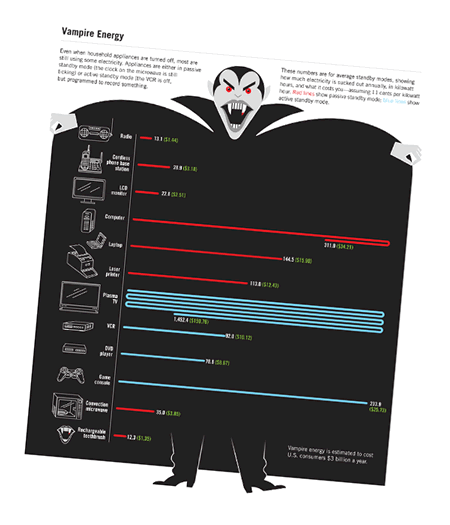
The term ‘vampire energy’ refers to anything that is wasting electricity while you’re not actively using it. Just like vampires these things are active at night and suck your blood… I mean money (to the tune of 3 billion dollars a year in the USA). From this info-graphic the biggest culprits are plasma screen TVs, video game consoles, inactive computers/laptops, and VCRs.
How to Stop It: Make sure buy electronics that turn completely off and use a power strip to turn off everything completely. Graphic Source

Holding on to Old Stuff
How does holding on to old stuff sap your wealth? Well, stuff you aren’t using is tying up valuable cash. This cash could be worth a lot in the future, especially if you consider compound interest. Read more in this post about how much is a $100 in the future… you’ll be surprised. In 50 years a $100 could be worth 28,900 at a 12% ROI. In addition, stuff has a way of multiplying until it fills all available space. Some us have grown up never throw anything away and saving everything, from the mundane to the ridiculous. I’ve never understood storage sheds because they seem like such a rip off. If you don’t use your stuff often enough that it can sit in a storage shed its time to get rid of that junk.
How to Stop It: Break the habit of buying stuff and sell stuff you haven’t used in 12 months.


Interest on Debt

This silent killer works while you’re sleeping, on vacation, sick, and working. It works all the time no matter what. Try to avoid interest at all cost. You may be surprised to see how much interest you pay on different APRs each month.
How to Stop It: Rapidly pay off your credit card debt and switch to an all cash lifestyle.

Buying Brand New
The two things that come to mind here are brand new gadgets (technology) and buying brand new cars. These two things can take wealth from you quicker than you can say ‘iphone price drop’. Stay off the bleeding edge of technology and buy when a product is in its maturity phase, not while it’s in the early adoption phase.

If you’ve done your research you can negotiate on your next car purchase. They say the second you drive off the lot your new car losses 30% of its value. Some cars are more likely to depreciate than others. Typically the more deluxe cars depreciate quicker.

How to Stop It:
Buy with cash and do your research. Find deals on craigslist and other classifieds for medium ticket items.


Inflation – The Hidden Tax

If you don’t protect yourself from inflation you will be in trouble when you retire. Inflation eats away at your wealth by deteriorating the value of the cash you hold. Because the government has a printing press they can print out as much money as they want. When they do this it ‘waters down the cool-aid’. When the cool-aid is too watery it’s pretty well worthless to everyone. On average you want to have a return on investment of at least 3% or higher each year just to stay above inflation. Cash in a high interest savings account just won’t cut it anymore.

How to Stop It: Buy stock in companies that are inflation resistant (i.e. they can raise their prices when they need to). Try to own real assets with real value (e.g. land, gold, property, rentals).

If you’re talking about hyperinflation that’s a whole different story.

Tagged with:
 

best cpu for the price

Staying on the cutting edge of technology is costly. As CPUs become faster balancing cost and performance will help you get the best bang for the buck. If you don’t build your own computer please disregard this post.

The cpu chart on paulisageek.com takes the perfomance data from cpubenchmark and the pricing data from Newegg for the end ratio of performance/price. AMD tops the list for the best value and performance for the money. The ideal CPU costs between $70-100, any more or less then that and you’re not hitting the sweet spot.


Once You Know, You Newegg

Tagged with:
 

woman on phone old fashion vintage
Avoiding Current Phone Scams

Many people trust phone calls, espescially if the person on the other side of the line knows even a small piece of information. Like email, phishing attempts can yield surprising results. Other fraud takes the form of involuntary commitment and contract approval. Most of the time I call my credit card company I feel like they are trying to high pressure sell me into buying their identity protection service.

That’s not to say there aren’t valid ways companies using telephones to contact prospects and customers. Keep in mind that phone companies sell your phone number to telemarketers. We set up a land line for the first time in years. Once we had a dial tone, and before anybody knew our phone number, we were getting telemarketers calling within the hours. The calls came frequently until we added our name to the do not call list.

Identifying Fraud
Never give out your credit card number on the phone.
Fraud on the phone usually are after one thing, your credit card number. They will use a number of techniques to extract this number for you. One tactic involves postcards and letters that indicate you’ve won a prize. When you call the 800 or 900 number you will be asked for your credit card number to claim your prize. Once they have your credit card number it goes down from there. Now that they have your credit card they have all the power and will use all kinds of pressure to close the sale. If you do end up buying something there is a good chance you’ll never receive it. If you do receive the product it will be extremely poor quality. The worst part is that the scammers have your credit card number and will likely change you multiple times. How can you avoid this problem?

Always Ask for written Information before you agree to anything.

The quickest way to shut down a scam is to ask them to send you some written information. If they are a legitimate charity or company they likely have whole departments that can fulfill your request. Scammers and high-pressure salesmen hate when you request things in writing. When things are in writing you can make sound decisions, which isn’t what they want.

If you suspect something fishy, get off the phone right away.
Be polite but assertive. If something doesn’t feel right about the call tell them no thank you (maybe a couple times) and get off the phone.

Call them back
If your bank or credit card calls you and asks for your credit card number or social security number tell them you’ll need to call them back. The the actuall customer service number from their website, phone book, or back of your credit card and call them back. Most financial institutions wont ask for your social (unless you’ve called them and have forgotten your account number). They won’t ask you for your credit card number out of the blue either.

Don’t tell them anything
Don’t tell them anything they should already know. If it’s your credit card company they should have everything in front of them. The exception to this rule is if you called them.

Avoid High Pressure Sells
If you feel you’re getting any type of pressure remember you have control. If you use a free phone service like Google voice you can send the sales calls to the disconnected message.

The Most Common Types of Scams

You’ve won a deluxe vaction!
These involve a combination of mail and phone fraud. First you will receive a letter saying you have won a vacation but you need to be a member to claim the prize. You’ll have to join with your credit card. Once they have you’re credit card… I think you know the rest.

Help us catch a bank scammer
This scam involves someone posing as a bank security examiner. They’ll ask you to withdraw some money and give it to someone that comes to your home. The persons job is to re-deposit it into your bank account. Once they have your cash…I think you know the rest.

Only smart investors are buying
…and if you’re smart, you’ll be buying too. Senior citizens are particularly vulnerable to these types of scams. Most likely there will be a ‘window of opportunity’ or ‘extremly limited time’ to take advantage of the investment. The investment will be described as a ‘sure thing’ with returns well in excess of normal returns. Remember, excess profits come with excess risk. Some of these scams can go on for months before the scammer leaves town. Other times these scams can be ‘fly by night’ operations that hit and run. If something is too good to be true, it always is.

Magazine and newspaper subscriptions
Con artists will offer you a very low price on the magazine or newspaper subscription if you buy today with your credit card. Use one of the tactics described above and tell them to get a real job.

Conclusion
Hopefully this helps you avoid any future scams. If you feel you’ve been defrauded contact the following:

When investigating potential frauds, you should contact several of the following:

AARP (American Association for Retired Persons)
1909 K Street, NW
Washington, D.C. 20049

http://www.aarp.org

(800) 424-3410

The Federal Trade Commission
Bureau of Consumer Protection
600 Pennsylvania Avenue, NW
Washington, D.C. 20580

http://www.ftc.gov

(877) FTC-HELP

If you know of any more please leave a comment below.

Tagged with:
 

wants and needs

Distinguish between wants and needs
Distinguishing between wants and needs depends a great deal on your perspective. The more narrow someone interprets their life, the more likely they are to rationalize some wants as needs. For instance, in high school someone could literally buy status and position by the brand of clothing they wear. In this myopic view teenagers tend to be rather passionate about the brand of jeans they wear (instead of being satisfied with any pair of jeans that covers their behind).

Widening one’s view allows wants to be exposed as wants. Needs hardly need justification to be purchased.


What are needs?

You can’t get through college without seeing Maslow’s Hierarchy of Needs. As you discover what your needs are consider Maslow’s approach. The only things in the diagram that are actual physical (or material) things are on the base of pyramid. The longer someone dwells in the lower level the less likely they are to move to higher levels. From my own life and watching others, the biggest problem comes when we try to fulfill a higher need by ‘purchasing’ it.

maslows-hierarchy-of-needs


When wants become needs.

Consumer debt is a major problem in the United States. This type of debt represents a gluttony of wants justified as needs. One way to curb wants before they become needs is to switch to an all cash lifestyle. As this happens many of the items purchased with consumer debt are never purchased. Saving up to buy big ticket items allows time to make more rational decisions (and give you a chance to shop around).

What do you think?
What have you seen that helps prevent wants becoming needs? Please leave a comment and tell us what you think.

Tagged with:
 

Resources for Consumers
To save time, the environment, and your sanity these resources help protect your privacy from unwanted services.

Stop Pre-Screened Offers

Link: OptOutPreScreen
Opt out of pre-screened credit card and insurance offers. Companies can no longer peek at your credit score to see if you qualify for their services. The less mail you receive like this the less likely your identity will be stolen. Your free credit report will show you which companies have pulled your credit report for a pre-screened offer.

Stop TeleMarketers

Link: National Do Not Call Registry
Most telemarketers should not call your number once it has been on the registry for 31 days. If they do, you can file a complaint at this Website. You can register your home or mobile phone for free.

Reduce JunkMail

Link: Direct Marketing Association
There are two kinds of junk mail, prospect junk mail and customer junk mail. If you’ve purchased something from a company you are forever considered a customer. You can opt out of prospect junk mail through the Direct Marketing Association (DMA) see the link above. Hint: Try the deceased person form in the right column. If you are a customer you need to contact each company directly to have your name removed.

Stay Anonymous

Link: iNumbr
Protecting Your Privacy. Talk without sharing your real phone number. Get a virtual phone number that will forward calls to any phone. Google Voice is also a good option if you don’t plan on using the number for a lot of transactions.

Link: 10 Minute Mail
Beat spam with the best disposable e-mail service.

Link: Fake Name Genorator
Gives you everything you need to fill out forms.

Bypass Compulsory Registration

Link: Bugmenot.com
Get access to restricted areas of websites with this service.

Tagged with:
 

Personal Finance Goals 2010
2010 is here and it’s time to do some financial resolutions. How did you do? Are you financially flabby or financially fit? With a new year you can start fresh and make some goals that will stick for the long haul. This is a list of resolutions many financial gurus talk about regularly. If you have any suggestions leave a comment.

1) Pay off all your credit card balances. In 2009 all the credit card companies updated their terms and service agreements. Many of the changes had to do with new laws passed by congress. The laws were an attempt to help protect consumers that were trapped by credit card debt. The laws are also designed to protect consumers that are having financial hardship. But credit card companies are businesses that aim to make money. In the changes I’ve seen there are a few alarming changes: 1) Credit cards are moving to an adjustable rate on all new purchases, fixed rate cards are not very common any more 2) interest rates have increased across the board. This past week I had a credit card agreement increase the late payment APR to 29.99% variable. I haven’t seen that kind of rate in a long time. 2010 is the year to pay off all credit cards and switch to a cash lifestyle with pro-active budgeting.

2) Budget every dollar you spend. This is one thing we have done poorly on in year’s past. We been using Mint.com for 2009 and it’s opened our eyes to where our money is going. But budgeting is the next critical step for us.

3) Pay cash. When you buy your next car or new toy pay cash for it. Being able to save up and buy bigger ticket items with cash is a good way to get the best price on things you buy.

4) Start saving (automatically). Putting away $10 a paycheck is a good way to start saving if you haven’t already. It is suggested that you pay 10-20% of your income. Most banks will let you set up an automatic withdrawal if you need it. See this list of high interest savings accounts with updated rates for more information.

5) Setup an emergency fund. Learn how much is needed for an emergency fund an get started. Basically you’ll want to cover your basic expenses for three to six months.

6) Start another stream of income.
The more sources of income you have the more stable you’re finances will be. In business if a company only has one big customer they are being exposed to a lot of risk. Expand your income streams in 2010 for an improved balance sheet. Ideally, you’ll want to start another stream of income that is low maintenance and something you enjoy doing.

7) Learn and/or Improve your skills and education. Learning a new skill or improving an existing skill is always a good investment. Invest in education, text books, audio books, lectures, and courses. Finish your degree or start an advanced degree. This is one of the best investments you could ever make. Subscribing to blogs is also another great activity (since they are free and have relevant, timely, information).

8 ) Help someone in need. It feels really good to help someone that needs help. Volunteer or give a neighbor a helping hand. Charities have been hit hard by the recession. Try to help where you can.

9) Grow a garden. If all you grow are a few plants a garden is a good way to save money and its good for the environment. Some people think its also therapeutic to take care of things and watch them grow.

10) Spend more time with family and friends. For the first time in many years families have pulled together during the recession. They have spent more time together and have gotten closer. As the economy improves keep that tradition alive in 2010.

11) Do some financial house cleaning.
Visit the new year financial checklist and Dilbert’s guide to personal finance for some ideas. Some of the basics include: Update/write your will, get a free credit report, open an IRA with a discount broker,

Tagged with: